My wife showed me a piece in the Chronicle of Higher Education about how the University of Kentucky is falling far short of its statutory mandate of being a "top 20" public university by the year 2020. The reason isn't hard to figure out: the state doesn't fund education adequately and the voters don't seem to mind that.
Seriously - Kentucky passed a law that said UK is required to be teh awesome but has repeatedly cut its funding relative to costs. As a result the university has actually dropped in every meaningful ranking system (to the extent that these rankings are meaningful at all) - including its own system, which probably gives itself the benefit of every doubt. That's right - UK can't move up in the rankings, even when it grades itself on a curve.
Bottom line: when the issue is hiring a top-tier basketball coach or even building a new practice court, the state will always - ALWAYS - come up with the resources somehow. Public money, booster slush funds, some cash stuffed in a mattress somewhere, whatever. But when the issue is academics, that's a place to cut, not spend.
If the Kentucky legislature actually paid attention in math class - check that, if they actually HAD math class - maybe they'd realize you don't get something for nothing.
Showing posts with label rants. Show all posts
Showing posts with label rants. Show all posts
22 February 2011


21 February 2011
Time for another education rant

I'll be brief. Wisconsin has some economic problems, but overpaying teachers is not one of them. The starting salary for a teacher in Wisconsin: $25,000. College degree required, along with extensive review and licensing issues. Your average teacher can look forward to a salary somewhere in the mid 40's. This is NOT a lot of money. Despite this, the teachers' unions have already conceded to the GOP's demands to cut their salary and benefits. So the budget arguments are off the table.
Americans have fought and died for rights like collective bargaining. This is a freedom issue, and the Republicans are on the wrong side of it. Making teaching a less-attractive profession does nothing to improve Wisconsin's ability to educate its children and compete and succeed in a rapidly evolving economy, but taking away hard-fought rights (only for unions who historically support Democrats, of course) is disgusting.
Wisconsin can now look forward to less motivation and talent in their teaching pool. Attention, potential teachers: You can now make more money working full-time in food service or retail. Especially if you join a union.
Move over, Kentucky - Wisconsin is about to join you in the tragic sinkhole of low expectations.
20 October 2010
On the road again...
gonna be a busy couple of weeks so posting will be light. Again. just a couple of quick things.
First, the latest iteration of old-school vs. blogosphere happened in, of all places, a chemistry journal. Just the same old arguments - bloggers can't be trusted etc - from another obsolescent form of publishing. I was going to write the obligatory I-know-you-are-but-what-am-I post but the science bloggers did it better, so you should read this from David Kroll and this from Deborah Blum if you care to get the smart reaction.
I also noticed Maureen Dowd recently lamented the rebirth of anti-intellectualism on the right wing. I'm not going to do the "it happens as much on the left" thing because honestly, it doesn't.
My take on it is simple - we've allowed our politics to descend to new depths of stupid. We're poised to elect people who essentially believe dinosaurs and people lived together on this earth and belching a gazillion tons of smoke into the air really doesn't do anything bad, and it's totally OK to ignore challenging questions from reporters or even citizens, and it's even ok to hide where you get your money to broadcast your made-up crap.
We've allowed it to happen because no one with real power on the left (or even in the middle) has actually done anything to make it stop.
It's especially harmful to people in my line of work because most people see politics and PR as largely the same thing these days. PR is actually about getting to the truth. It's about telling people what's important. Sadly our politicians (and too many PR folks) think PR is about changing the subject or hiding what matters most.
If you do this right - or if you really want to do this right - you think Campaign 2010 is inherently bad for business.
First, the latest iteration of old-school vs. blogosphere happened in, of all places, a chemistry journal. Just the same old arguments - bloggers can't be trusted etc - from another obsolescent form of publishing. I was going to write the obligatory I-know-you-are-but-what-am-I post but the science bloggers did it better, so you should read this from David Kroll and this from Deborah Blum if you care to get the smart reaction.
I also noticed Maureen Dowd recently lamented the rebirth of anti-intellectualism on the right wing. I'm not going to do the "it happens as much on the left" thing because honestly, it doesn't.
My take on it is simple - we've allowed our politics to descend to new depths of stupid. We're poised to elect people who essentially believe dinosaurs and people lived together on this earth and belching a gazillion tons of smoke into the air really doesn't do anything bad, and it's totally OK to ignore challenging questions from reporters or even citizens, and it's even ok to hide where you get your money to broadcast your made-up crap.
We've allowed it to happen because no one with real power on the left (or even in the middle) has actually done anything to make it stop.
It's especially harmful to people in my line of work because most people see politics and PR as largely the same thing these days. PR is actually about getting to the truth. It's about telling people what's important. Sadly our politicians (and too many PR folks) think PR is about changing the subject or hiding what matters most.
If you do this right - or if you really want to do this right - you think Campaign 2010 is inherently bad for business.
05 October 2010
Bonnie Tyler's Words Live On
 |
| OK, so, I like big hair |
Today she's singing about the need for a hero to scientists - because it's not just science funding that's under attack. Virginia's Attorney General is at it again:
I'll readily acknowledge that when Cuccinelli did this the first time I thought it was nothing more than a stunt by a political opportunist in the wake of this faux scandal. After all, his subpoenas were obviously sloppily crafted and they were quickly shot down by a judge. But now it's apparent he wants to press this issue. He's trying to intimidate researchers and he's essentially adding a page to the climate change denial playbook - if you can't win an argument on the merits, make stuff up and use taxpayer resources to sue.
It's clear that AG Cuccinelli, drawing on his vast experience of exactly zero days as a climate change researcher, now believes he can tell what's good research and what's not:
But Cuccinelli gets away with it for one simple reason: there is no organized opposition. No one stands up for science in our public discourse or in our policy debates when standing up for science gets the least bit uncomfortable or expensive. When a researcher's conclusions start to rub someone the wrong way, someone just makes stuff up about the researcher, turns him into a villain, and suffers absolutely no consequences for their lies. Scientists have no allies who will come to their defense, because scientists have done remarkably little to build relationships with influential people beyond their own, cloistered communities. (It's called "ivory tower" for a reason, people.)
And no, I don't consider the occasional rant from a science blogger, with or without f-bombs, to be "consequences." (Though I quickly searched the science blogosphere for reactions to this and I didn't even find this.) Bottom line: there is no real, organized, diverse opposition that encourages people to take action and demonstrate a real down side to attacking science and scientists.
I'm sure someone at the University of Virginia will say something along the lines of "attacking scientists is bad." I'm guessing the words "chilling effect" and "academic freedom" will be used. And I'm guessing that will be the extent of opposition. Because, you know, it's uncomfortable to get into discussions like this.
There are political constituencies in this country that Cuccinelli would not dare attack. Many of those constituencies have much less money than you may think. But they're organized. They have leaders. They have people who mobilize. And they're not afraid to mix it up.
Not so for scientists. And as long as this continues, scientists will continue to be "picked off," a handful at a time.
I'm probably not going to make too many friends for saying this - but it's the truth. Scientists don't seem to have much trouble mocking their critics from behind their keyboards or using heated language when talking about science itself. But I really don't see much when it comes to speaking truth to power. I really don't see much when it comes to building a movement that would make people like Cuccinelli think twice before pulling a stunt like this. Going on the attack is uncomfortable. Executing a well-planned and coordinated attack is time-consuming on top of uncomfortable. People would rather advocate or do something polite or "positive."
But it's long past time for scientists to go on the attack. It's long past time for someone among their ranks to emerge as a leader. It's long past time for scientists to organize.
Who's going to step up?
Virginia Attorney General Ken Cuccinelli has sent a new civil subpoena to the University of Virginia, renewing a demand for documents related to a work of a former university climate scientist that was stymied when a judge blocked his previous request in August.For those of you just joining us, Cuccinelli's target is Michael Mann, a researcher who worked at the University of Virginia until 2005. To be quite general, I think Mann's research said something along the lines of "climate change is happening quickly." Then someone stole some of his emails and alleged he and other scientists were faking their data or something like that, creating the farce the media sometimes called "climate-gate." Mann has since been exonerated from the allegations, though to the best of my knowledge no one has ever caught the person or people who hacked into those computers and stole and published those private emails.
I'll readily acknowledge that when Cuccinelli did this the first time I thought it was nothing more than a stunt by a political opportunist in the wake of this faux scandal. After all, his subpoenas were obviously sloppily crafted and they were quickly shot down by a judge. But now it's apparent he wants to press this issue. He's trying to intimidate researchers and he's essentially adding a page to the climate change denial playbook - if you can't win an argument on the merits, make stuff up and use taxpayer resources to sue.
It's clear that AG Cuccinelli, drawing on his vast experience of exactly zero days as a climate change researcher, now believes he can tell what's good research and what's not:
"Specifically, but without limitation, some of the conclusions of the papers demonstrate a complete lack of rigor regarding the statistical analysis of the alleged data, meaning that the result reported lacked statistical significance without a specific statement to that effect," the CID alleges.Of course this isn't the first time that climate science has come under attack from a politician. There are plenty of scientists who are quite used to this sort of thing in a variety of fields - evolution, reproductive research, even vaccines. But this clear abuse of power strikes me as particularly egregious - the specific allegations have already been shown to be without merit, and the AG is simply on the wrong side of the science. If I were a Virginia taxpayer, I'd want a refund.
But Cuccinelli gets away with it for one simple reason: there is no organized opposition. No one stands up for science in our public discourse or in our policy debates when standing up for science gets the least bit uncomfortable or expensive. When a researcher's conclusions start to rub someone the wrong way, someone just makes stuff up about the researcher, turns him into a villain, and suffers absolutely no consequences for their lies. Scientists have no allies who will come to their defense, because scientists have done remarkably little to build relationships with influential people beyond their own, cloistered communities. (It's called "ivory tower" for a reason, people.)
And no, I don't consider the occasional rant from a science blogger, with or without f-bombs, to be "consequences." (Though I quickly searched the science blogosphere for reactions to this and I didn't even find this.) Bottom line: there is no real, organized, diverse opposition that encourages people to take action and demonstrate a real down side to attacking science and scientists.
I'm sure someone at the University of Virginia will say something along the lines of "attacking scientists is bad." I'm guessing the words "chilling effect" and "academic freedom" will be used. And I'm guessing that will be the extent of opposition. Because, you know, it's uncomfortable to get into discussions like this.
There are political constituencies in this country that Cuccinelli would not dare attack. Many of those constituencies have much less money than you may think. But they're organized. They have leaders. They have people who mobilize. And they're not afraid to mix it up.
Not so for scientists. And as long as this continues, scientists will continue to be "picked off," a handful at a time.
I'm probably not going to make too many friends for saying this - but it's the truth. Scientists don't seem to have much trouble mocking their critics from behind their keyboards or using heated language when talking about science itself. But I really don't see much when it comes to speaking truth to power. I really don't see much when it comes to building a movement that would make people like Cuccinelli think twice before pulling a stunt like this. Going on the attack is uncomfortable. Executing a well-planned and coordinated attack is time-consuming on top of uncomfortable. People would rather advocate or do something polite or "positive."
But it's long past time for scientists to go on the attack. It's long past time for someone among their ranks to emerge as a leader. It's long past time for scientists to organize.
Who's going to step up?
24 August 2010
Outsourcing Disrespect
Every now and then I get an email from a pal in the mom-o-sphere that makes me want to throw up in my mouth a little. Today was one such occasion.
A friend passed along a solicitation from a new-sounding company called Tomoson (not interested in linking) asking her to sign up at their website so she could receive free stuff to review on her blog. To get the free swag -things like wigs, keychains and novelty sauce - she apparently would have to embed some html code in her blog so the company could monitor posts and let the client who makes thetchotchkes high-quality merchandise know what an awesome job they're doing, getting bloggers to write about them essentially for free.
I checked out their website and they had a section for "promoters" with a video that claimed they had "thousands of bloggers" (yeah, I'm calling bullshit on that) ready to opine on the awesomeness of keychains, and that these blog posts would create some kind of SEO juggernaut that would launch your hotsauce or branded nail file or whatever to the upper echelons of the google machine. They've just created this automated system designed to capitalize on the credibility of human interaction that is peer review - and they've "streamlined" it by taking all the human interaction out of it.
I don't do a ton of consumer marketing, so I don't claim to be the nation's foremost expert, but I'll definitely put my professional reputation and my relationships in the mom-o-sphere against this company any day. (I noticed that the business owners don't put their names on the site.) And I'm going to be straight - not only do I think this approach runs counter to everything I believe in professionally, I think doing what this company proposes actually does much more harm than good for clients. I think the brands that use a service like this are being dismissive and disrespectful to bloggers, and will be getting absolutely useless metrics.
Here's the message a company is sending to bloggers by using this service. Not only are they declining to engage directly with bloggers on a substantive level, not only are they fishing for free advertising, not only are they pawning off cheap crap, not only are they requiring people to “apply” for this cheap crap – they can’t even be bothered to do it themselves and instead outsource it on the cheap.
And before anyone says "well of course he's trashing them, he's a competitor" - not so. In my business I sometimes hire a subcontractor to help with outreach. But if I'm reaching out to moms, I tend to hire a mom. If I'm reaching out to medical professionals, I hire a medical professional. I work with people who have credibility in their own communities and I build non-transactional relationships. This automated system is transactional by definition. It's not even a full step removed from buying followers on Twitter.
And as I said, I don't do a lot of consumer marketing anyway. I don't foresee developing a strategic communications campaign that asks bloggers to review the comfort of clear bra straps.
A friend passed along a solicitation from a new-sounding company called Tomoson (not interested in linking) asking her to sign up at their website so she could receive free stuff to review on her blog. To get the free swag -things like wigs, keychains and novelty sauce - she apparently would have to embed some html code in her blog so the company could monitor posts and let the client who makes the
I checked out their website and they had a section for "promoters" with a video that claimed they had "thousands of bloggers" (yeah, I'm calling bullshit on that) ready to opine on the awesomeness of keychains, and that these blog posts would create some kind of SEO juggernaut that would launch your hotsauce or branded nail file or whatever to the upper echelons of the google machine. They've just created this automated system designed to capitalize on the credibility of human interaction that is peer review - and they've "streamlined" it by taking all the human interaction out of it.
I don't do a ton of consumer marketing, so I don't claim to be the nation's foremost expert, but I'll definitely put my professional reputation and my relationships in the mom-o-sphere against this company any day. (I noticed that the business owners don't put their names on the site.) And I'm going to be straight - not only do I think this approach runs counter to everything I believe in professionally, I think doing what this company proposes actually does much more harm than good for clients. I think the brands that use a service like this are being dismissive and disrespectful to bloggers, and will be getting absolutely useless metrics.
Here's the message a company is sending to bloggers by using this service. Not only are they declining to engage directly with bloggers on a substantive level, not only are they fishing for free advertising, not only are they pawning off cheap crap, not only are they requiring people to “apply” for this cheap crap – they can’t even be bothered to do it themselves and instead outsource it on the cheap.
And before anyone says "well of course he's trashing them, he's a competitor" - not so. In my business I sometimes hire a subcontractor to help with outreach. But if I'm reaching out to moms, I tend to hire a mom. If I'm reaching out to medical professionals, I hire a medical professional. I work with people who have credibility in their own communities and I build non-transactional relationships. This automated system is transactional by definition. It's not even a full step removed from buying followers on Twitter.
And as I said, I don't do a lot of consumer marketing anyway. I don't foresee developing a strategic communications campaign that asks bloggers to review the comfort of clear bra straps.
23 August 2010
My Free PR Advice to Scientists: It's Not Just About Media Training

But here's the simple truth: "Big Science" is losing too many of the battles that really matter, and if all scientists do is learn how to speak in sound bites and wear the right color shirt on camera, it's only going to get worse. I'm not just talking about the back-and-forth debates about climate change or evolution or the latest miracle cure for whatever. I'm talking about the fact that science is marginalized or even condemned by people who make decisions for all of us.
I'm talking about Governor Bobby Jindal thumbing his nose at sound science and actually making things worse in the Gulf of Mexico - yet being lauded as some kind of hero by pundits who don't know any better. I'm talking about the continued muzzling of scientists by government officials - you know, the people who claim they just don't want to release science that hasn't been peer reviewed yet and then go ahead and release non-reviewed reports that say everything's pretty awesome. (It's not.) I'm talking about a Congress that firmly believes math is something for the other guy to worry about. (Yes, I know Chris already wrote a book about this.)
I wrote about this last month:
Here's the sad, simple truth: Scientists are marginalized in politics and the media because there's no downside to marginalizing them. The community is loosely organized at best from a political / PR standpoint - despite the multitudes of organizations within the community. There is no groundswell of support, no army of activists ready to go at a moment's notice. Worse still, there's no real agreement among scientists how to address this - or even if they should...
Critics of science (you know, like some national groups with the word "family" in their name) consistently kick scientists' asses in PR and politics not because they're made of money but because they have a plan and they stick to it. They learn as much as they can about the pool of persuadable people and the pressure points of people in power. They test messages relentlessly with focus groups and polling. They identify speakers and develop talking points and pitch stories to reporters. They recruit allies. They don't expect to "win" in a day, or a week, or a month - but they have specific benchmarks and timelines. They have specific actions they ask people to take at specific times - typically in advance of milestones in a court case or a political campaign or the legislative calendar. They build databases of supporters and they stay in contact with them. They constantly work to build relationships beyond their own, cloistered community - so when the time comes to build a coalition of support around an issue they're not introducing themselves by asking for something.
Bottom line: there's nothing even close to this from scientists or their "allies." Nothing. Instead there's mockery or infighting or indifference.I'll say it again: There is no plan. There is no leader. There is no coordinated effort to assertively place the other side on the defensive. Scientists and their allies are "fighting back," and rather feebly at that; they should be striking first. A handful of leaders should be thinking about what they want, who they should influence (and how) to get what they want, and what they'll do to make sure their adversaries' strategies implode.
I would cherish the opportunity to get together with a handful of scientists/bloggers/writers who are mad as hell and aren't going to take it anymore. Any takers?
18 August 2010
It's Official: Nomenclature Is a Weapon of Mass Destruction
 |
| this is what happens when oxygen levels drop in the ocean |
Now nomenclature has suddenly (and perhaps officially) made millions upon millions of gallons of oil miraculously disappear from the Gulf of Mexico. A report earlier this month from the National Oceanic and Atmospheric Administration reports:
The vast majority of the oil from the BP oil spill has either evaporated or been burned, skimmed, recovered from the wellhead or dispersed much of which is in the process of being degraded. A significant amount of this is the direct result of the robust federal response efforts.Which in government-PR speak means "we won't be spending a ton more time or money dealing with this because the way we've defined it, we're almost done fixing it. So chill out. We got this."
Enter the scientific community, led by some really outstanding researchers from The University of Georgia. (Goooooooo DAWGS.) They took a look at what the government said and then looked at what's actually going on and had this to say:
“One major misconception is that oil that has dissolved into water is gone and, therefore, harmless,” said Charles Hopkinson, director of Georgia Sea Grant and professor of marine sciences in the University of Georgia Franklin College of Arts and Sciences. “The oil is still out there, and it will likely take years to completely degrade. We are still far from a complete understanding of what its impacts are....
The group analyzed data from the Aug. 2 National Incident Command Report, which calculated an “oil budget” that was widely interpreted to suggest that only 25 percent of the oil from the spill remained.
Hopkinson notes that the reports arrive at different conclusions largely because the Sea Grant and UGA scientists estimate that the vast majority of the oil classified as dispersed, dissolved or residual is still present, whereas the NIC report has been interpreted to suggest that only the “residual” form of oil is still present.This is science-speak for "Yeah, ummm... dudes? Not so much. 'Dispersed' doesn't mean 'gone.'" There is no doubt that the ecological impacts of this spill will be devastating for years to come. And NOAA is spinning it. The media, to their credit, took the UGA folks seriously.
 |
| comes with a side of defibrillator |
Now, cut it in half. Cut the halves in half, and eat one of the quarters. Try not to die. Take another quarter and put it on another plate.
Take the remaining two quarters and cut them in half. Then cut all those pieces in half. Then repeat this until you basically have a bunch of little pieces of heart attack smeared all over a plate. Then spray that smushed up death plate with some liquid borax or something like that.
Then take both plates, head over to the local supermarket, and dump the plates into the lobster tank and see what happens. (Be prepared to pay for all the lobster. And maybe the tank.)
I may be wrong, but I'm pretty sure our government would be pleased if you thought the borax-infused death smear in front of you doesn't really exist any more because it's in a bunch of little pieces. You really only need to worry about that quarter on the other plate, and that's going away naturally or something.
And when the borax-infused death smear makes its way up the food chain? You can be damn sure the company that gets sued for selling food that got someone sick will say the government told everyone it was ok, so they shouldn't be held responsible.
17 May 2010
Orac, Mockery, and the Absence of Outreach

Orac spends a lot of his time mocking the anti-science crowd, as is his right. He's quite good at it. He does so from his perch at Scienceblogs, which according to their own marketing data is read mostly by scientists (or at least people with graduate degrees and people who manage scientific projects). He's apparently gotten some criticism that he's simply talking to other scientists when he makes his arguments - that he's "preaching to the converted" and this helps no one. I've made a somewhat similar argument, though I've never called out Orac specifically:
Science has a serious PR problem, and it's this: Critics of science are searching people out and talking with them in the simplest terms possible. Scientists and "science writers," if they talk at all, are basically talking with each other.
So I was interested in his response, which you should read but is summed up like this:
When I hear such charges now, I think I'll just refer the one doing the complaining to this video:
Let me stress Orac is under no obligation to be a Science Ambassador. It's not his job to move the public opinion needle. He can write whatever he wants, and I'll probably read it and nod my head and smile. But given that he made this response, I assume he's at least interested in the issue.
I realize this response wasn't made personally for me. But it oversimplifies the criticism. First, who assumes there's only "agree and disagree?" It's precisely because there are so many people in the middle that I think Science's PR problem is so tragic. (oh, and the little bit in the video making a play on the word "converted" evaporates if you prefer the term I sometimes use, "preaching to the choir.")
This video is a curious defense of homophily. Of course it's good to have discussions within one's own community. Of course it's good to galvanize ideas and sentiment and rally the base - it just can't be the only thing you do. (See "Palin, Sarah.")
The thing that irked me the most about the video (and I realize this isn't Orac's original material) is this idea that posting material online "makes it available" so people can see it when they're ready to change their opinions or accept new information.
Sorry, this is a cop-out. Again, no one is forcing Orac or anyone else to be an Ambassador. But if he cares about "moving the needle" in the public, he's smart enough to know this isn't how diplomacy works. The anti-science cranks of the world aren't waiting around for people to find them. As Orac points out, they're showing up on Huffington Post and Oprah and daily news shows - you know, where the people are. And they're listening to people and communicating in terms that resonate. (And by the way, they're pushing their new book or their new line of organic herb supplements that remove "toxins" or cancer-curing magnets, which could be yours for just 4 easy payments of $29.95 but supplies are limited so ACT NOW!)
The whole premise of the argument is based on the notion that people outside Orac's circle are either already getting his information, or will actively seek it out and know where to find it in the future. That's just not how communication and persuasion works. You don't convince people that a particular treatment for a disease is important simply by publishing an article in JAMA. It's just the first step.
Calling the other side a bunch of quacks probably feels good. Using scientific data to show why they're quacks probably feels good too. And if that's all you want to do, that's fine. I'll keep reading it.
If you're interested in more, you have to get out and find those people in the middle (we know they're not reading scienceblogs and they're not likely to look for scienceblogs) and listen to their concerns and understand their motivation and explain your position in terms that are relevant and understandable. You have to get out of your comfort zone a little.
As always, more soon.
07 May 2010
Making Science Relevant
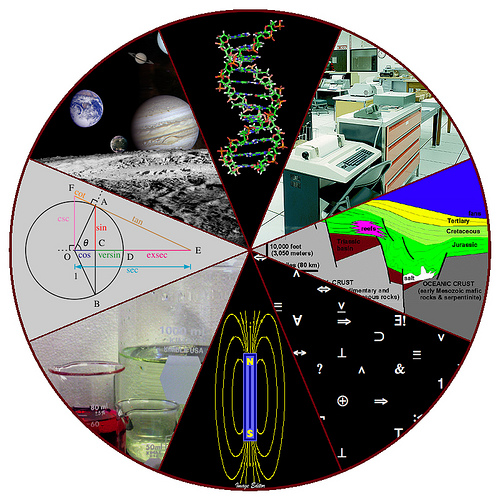
Science has a serious PR problem, and it's this: Critics of science are searching people out and talking with them in the simplest terms possible. Scientists and "science writers," if they talk at all, are basically talking with each other.Second, the beginnings of a solution:
I've heard people say "we need to make science cool" - a lot of that talk was at ScienceOnline 2010 - and that would be nice, but I don't think that's really the answer. "Science" isn't really going to beat out American Idol or the NFL or whatever.
Cool is important, but I think we need to make science relevant. There's a difference.
Since then I've been having some conversations with some science bloggers, some mom bloggers, some people who fit squarely in both camps, and some people who fit in neither camp on a project we could do to help address this. (More on that later.) But earlier this week I saw an example of what "making science relevant" looks like:
Yes, that's Rachel Maddow talking with an actual scientist - Dr. Edward Overton at LSU's School of the Coast and Environment - about the goop that's floating around in the Gulf of Mexico right now, what can be done about it, and why that's important.
Without a doubt, Dr. Overton did a tremendous job. First, he knew his audience and avoided technical jargon, opting for terms like "the consistency of roof tar" and "chocolate mousse." Second, he did a great job keeping his language moderate and his tone calm when prompted to expound on doomsday scenarios. This is critical. Media types are trained to focus on the controversy and the crisis - "if it bleeds, it leads" is a common mantra in the journalism industry, and cable news takes it to the next level - but Overton stuck to his guns, explaining what was cataclysmic versus what was simply bad and reminding us all to think about both the "possible and the probable."
Most importantly, by doing a good job in the interview he put the role of science in its proper context for an important current event. You just can't overstate this. Maddow and Overton flipped the current thinking of science in the media on its head. Instead of trying to shoehorn a "science story" into the current news stream without context, they took a relevant, salient issue and explained the role scientists play in addressing it.
Think about how it works right now. On television, sometime after the story about what the President said today and what the stock market did, but before the story about a panda coming to the zoo, you'll sometimes see a story that starts with "A new study was released today by a medical journal that says coleslaw causes cancer in ferrets" or something. So on top of all the other things you're thinking about you have to remind yourself to not eat coleslaw, you know, because of the ferrets. (The next day science bloggers will say the article wasn't the definitive word on the slaw-ferret cancer connection, the methodology was flawed, correlation doesn't mean causation, and the media got it all wrong, and so on.)
In newspapers, or at least in big newspapers, there's a science-technology section that comes out once a week - all neatly packaged and self-contained, chock full of cool stories about a solar eclipse in Bhutan or the DNA of fruit bats or maybe the dinosaur bone exhibit.
But it's all segregated from the rest of the news, even when there's arguably a strong role for science to play in a major story. Think fast - what's the first thing you remember in the news reporting about the volcano erupting in Iceland? Admit it - you remember all the flights in Europe being canceled. BREAKING NEWS: ABC News reports Whitney Houston has to take a boat. Seriously.
I'm not suggesting we should stop publishing science sections in newspapers or talking about new health studies on TV - while the reporting is occasionally flawed, you can still find boatloads of great stories that educate, entertain, provoke, and even inspire you. I'm suggesting science isn't an "angle" to be exploited in a story. It's a big part of every day life. Scientists and those who want science to be a more meaningful part of large discussions have to make the case for relevance and enter those discussions in a non-intimidating way.
The first step in this, I think, falls on scientists and science communicators. The good news is they have to do something I know they already do well - listen and pay attention, and search for common ground with others.
More soon.
03 December 2009
Suicide Pact, Revisited
I'll try to be clear here: a six-percent cut in higher education is NOT an appropriate reason for college presidents to take a rhetorical victory lap. It's a reason for outrage. This budget is NOT an act of courage or a sign of commitment to education. It's a suicide pact that will send smart people looking for opportunity - the only hope for Kentucky's future - heading toward the exits. It's a sure sign that Kentucky is trapped in a cultural and political sinkhole of low expectations and profoundly wrong-headed thinking.My wife turned out to be one of those smart people looking for opportunity who headed for the exit, taking her husband and son with her. A former faculty member at the state's flagship university, she's now on the faculty at Duke University School of Medicine. A number of other faculty members in her department have also left.
When the legislature implemented these spending cuts, the University of Kentucky was actually under a statutory mandate to be a "top 20 public university" by 2020. Of course, the legislature didn't specify what "top 20" meant. But at the time, the US News and World Report college rankings - certainly not the only ranking system, but probably the most well-recognized - had UK behind 55 other public universities, dropping a few spots from the previous year.
I checked the most recent rankings for public universities - UK is now tied for last on their list. (BTW, Duke is #10 on the list of ALL universities, not just public or just private.)
Now, in the real world lists like this are subjective and they don't mean much. Except the state legislature has decreed rankings mean quite a bit. They even passed a law. (Can't seem to pass a law making cross burnings a hate crime, though. Apparently too controversial.)
This may be terribly unfair, but I can't help but think this is really a reflection of the values and culture of the people there. The political will exists to be able to say "we're among the best," but not to actually improve by any substantive measure. Having the cheapest cigarettes in the nation is more important than paying market rates for UK employees - unless, of course, that UK employee is the basketball coach, in which case no price is too high.
In fact, for a brief time, Kentucky's highest paid public employee - not simply in the UK system but in the entire Commonwealth - had the following job description: "Do NOT coach the UK basketball team." Seriously. He was supplanted by a guy whose job description is "Please DO coach the UK basketball team." And that guy is paid more than any college basketball coach in America.
And hey, thanks in no small part to those cheap cigarettes, Kentucky can finally boast it's #1 in something, and it's not even close - lung cancer deaths.
Now the economy is in trouble, and faculty at UK should be bracing themselves for another year without a salary increase - and that's a best-case scenario. Faculty lines aren't being filled. Commitments made to recruited faculty aren't being kept. And once again the debate won't be whether the state will cut higher ed funding, but how much.
Of course, my wife and I know plenty of very good people still in Kentucky who know that this is a terrible problem and want their leaders to make the tough decisions to fix it. But the circumstances there lead to one simple conclusion: Kentucky doesn't simply need a shift in thinking, it needs a leadership transplant.
This suicide pact has sealed the fates of too many Kentuckians, and the sinkhole is only growing deeper.
09 October 2009
Checking in from the wildnerness
A couple of quick thoughts today. I'm really to swamped to do much more right now. But this is my blog and I get to rant.
First, a social media savvy entrepreneur might build a pretty strong business coordinating logistics for people who are moving to a new city. I have to say I'm flabbergasted at the consistently bad experiences my wife and I (mostly my wife) have had over the past few weeks, from our realtor in Kentucky (absolutely horrendous) to the moving company (thousands in damage) to utility companies and everything else. We've called the same companies dozens of times and we At this point I'd pay a small fortune to have someone take all that stress off out hands. The biggest problem is nobody talks with anyone else. You have to start the process over every time you call to get the same problem fixed. Everything is shipped out to subcontractors and artificial barriers are set up all the time that prevent people from seeing the big picture, and all it takes is one lazy or disinterested person to slip up and the whole system breaks down.
I realize there are people with profoundly more serious problems and I'm among the most fortunate people on Earth. But SHEESH.
Second, I just think it's hard to position yourself as "pro-American" when you're cheering over Chicago losing the Olympics and complaining when the President wins the Nobel Peace Prize. There are people on television saying things like "the damage is done." I just don't know how one recovers politically from winning a Nobel Prize.
And I'm wondering why Kanye West didn't Bogart the microphone - "Listen Mr. President, I'm gonna let you finish, but Morgan Tsvangirai in Zimbabwe had one of the best years EVER..."
First, a social media savvy entrepreneur might build a pretty strong business coordinating logistics for people who are moving to a new city. I have to say I'm flabbergasted at the consistently bad experiences my wife and I (mostly my wife) have had over the past few weeks, from our realtor in Kentucky (absolutely horrendous) to the moving company (thousands in damage) to utility companies and everything else. We've called the same companies dozens of times and we At this point I'd pay a small fortune to have someone take all that stress off out hands. The biggest problem is nobody talks with anyone else. You have to start the process over every time you call to get the same problem fixed. Everything is shipped out to subcontractors and artificial barriers are set up all the time that prevent people from seeing the big picture, and all it takes is one lazy or disinterested person to slip up and the whole system breaks down.
I realize there are people with profoundly more serious problems and I'm among the most fortunate people on Earth. But SHEESH.
Second, I just think it's hard to position yourself as "pro-American" when you're cheering over Chicago losing the Olympics and complaining when the President wins the Nobel Peace Prize. There are people on television saying things like "the damage is done." I just don't know how one recovers politically from winning a Nobel Prize.
And I'm wondering why Kanye West didn't Bogart the microphone - "Listen Mr. President, I'm gonna let you finish, but Morgan Tsvangirai in Zimbabwe had one of the best years EVER..."
Subscribe to:
Posts (Atom)